
How Bluestone supported the technical integration of a lower-emission ferry built for efficiency, resilience and passenger service
By George Balan, PhD Eng., Head of Shipbuilding Supervision and Plan Approval, Bluestone Group
NEREA represents a new generation of Mediterranean ferry: lower-emission, hybrid and built for the reliability that essential island routes demand. The 110-metre Ro-Pax, built by Sefine Shipyard for Caronte & Tourist, was recognised with a Shippax Award 2025 as a milestone in the modernisation of Italian shipping.
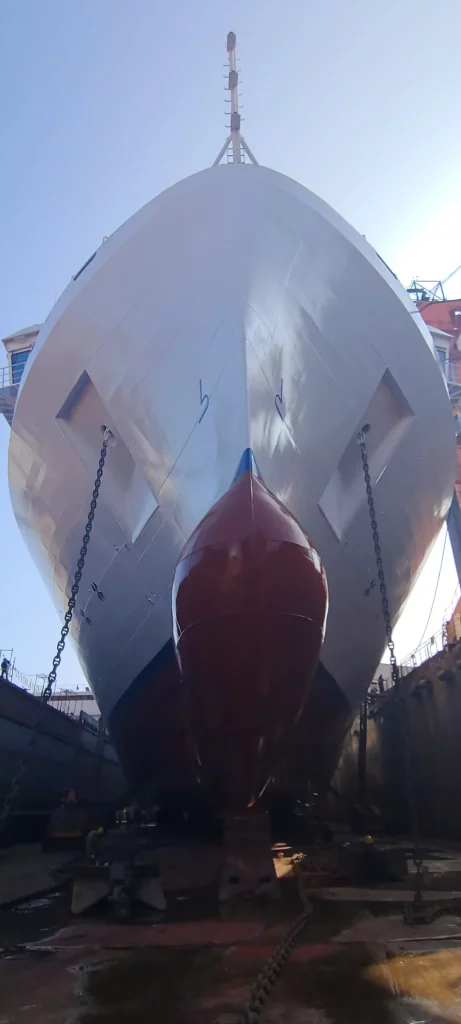
For Bluestone, NEREA demonstrates how newbuilding supervision is changing. Passenger vessels have always demanded careful coordination, but hybrid propulsion, LNG, batteries, photovoltaic panels, advanced energy management create a deeper level of technical interdependence. Beyond systems being installed correctly, the supervision challenge is whether those systems can work safely together in real operating conditions.
The project
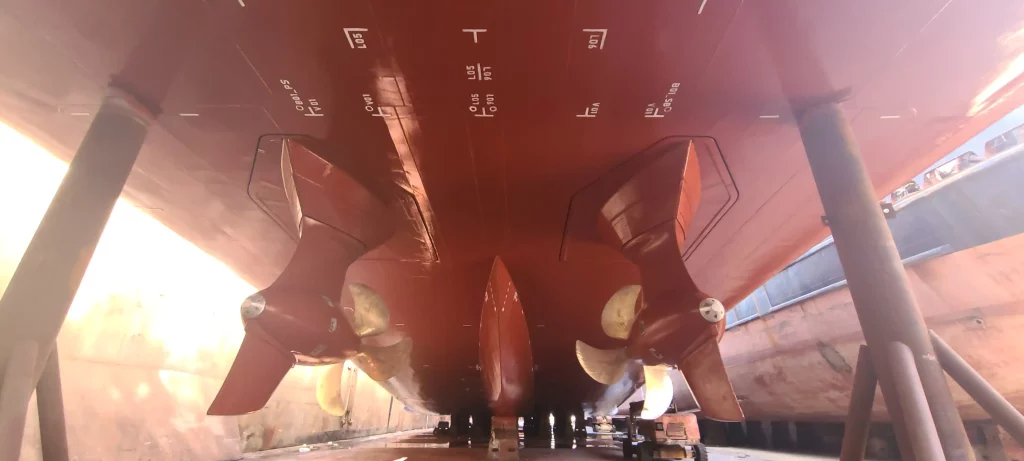
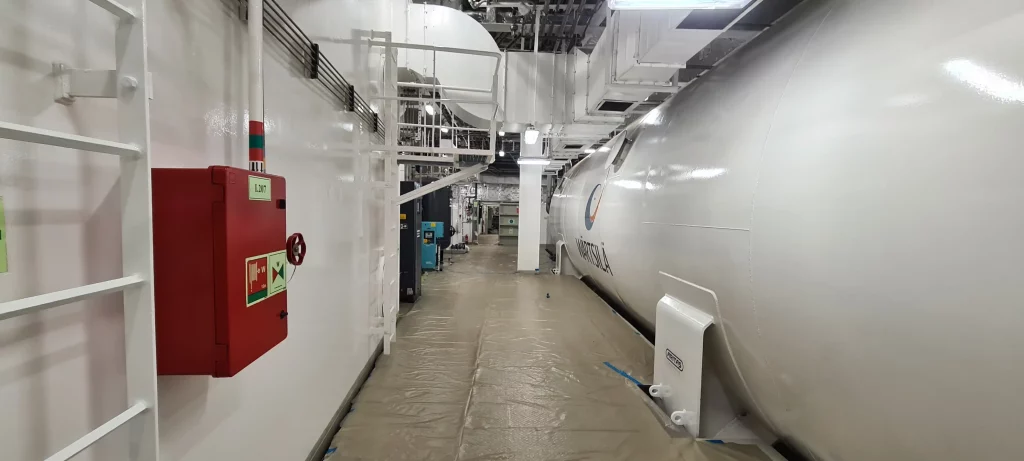
Designed for short-sea services around Sicily, NEREA combines sustainability, passenger comfort and route resilience. It carries up to 800 passengers in Class B operation and 400 in Class A, alongside 520 lane meters of cars, heavy vehicles and dangerous goods. Diesel-gas/electric propulsion is supported by LNG, a 1,000 kWh lithium battery system, photovoltaic panels, silicone-based hull paint and advanced energy management. Caronte & Tourist has reported estimated reductions of 45% in CO2, 60% in NOx, 99% in SOx and 99% in particulate matter when comparing NEREA on LNG with a similar MDO-powered vessel.
The challenge
Ro-Pax ferries are demanding to build because they must balance technical performance with passenger experience, vehicle capacity, safety, accessibility and service reliability. NEREA added complexity by combining several energy and efficiency systems within a single 110-metre hull, each with its own design, safety and maintenance requirements. The hardest task was defining how those systems would interact with each other.
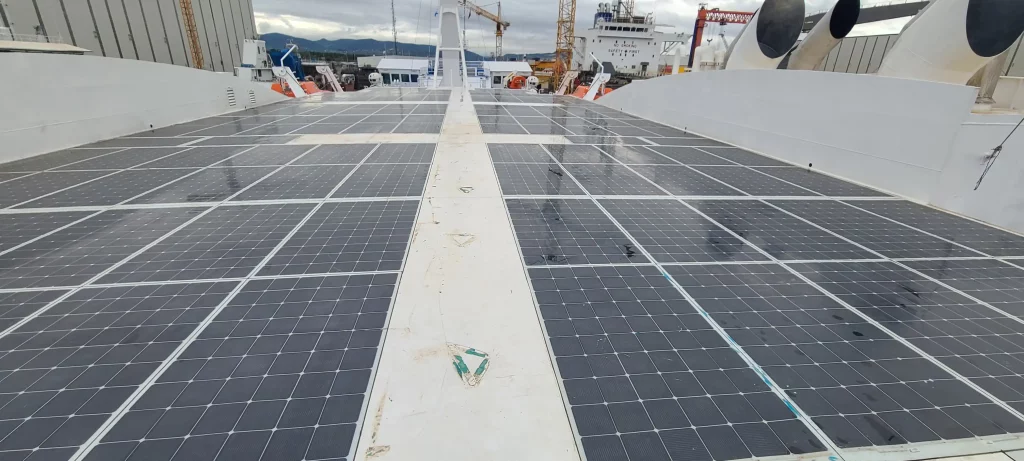
Photovoltaic integration is a clear example. On paper, solar generation looks like a simple efficiency measure. In practice, Bluestone’s team had to assess how it would behave within the wider electrical architecture, including the power management system, operating modes and blackout recovery. If photovoltaic input interfered with emergency restart sequencing, the vessel’s ability to recover reliably from a blackout could be compromised. The solution was an operational matrix defining how solar power could enter the main grid while keeping emergency recovery logic protected. That was a vessel-specific integration problem, not a generic compliance exercise.
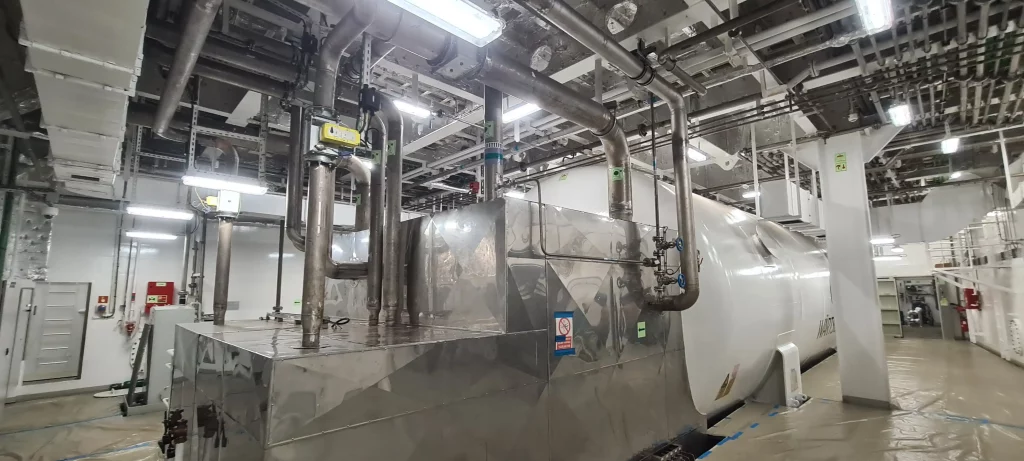
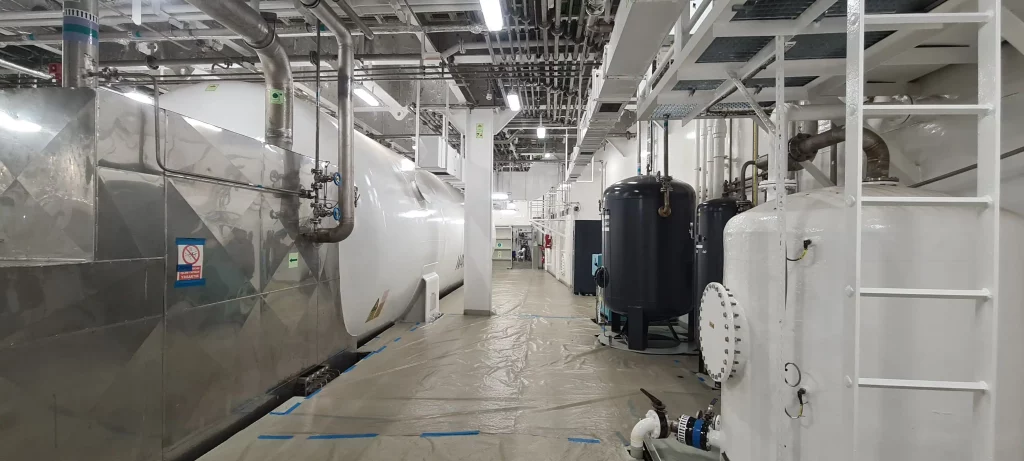
Space allocation added further pressure. Battery rooms, LNG venting ducts, cable routes, ventilation, passenger areas and maintenance access all compete for room on a hybrid passenger vessel. On NEREA, the LNG venting arrangement had to be integrated to preserve accommodation space while maintaining safety and serviceability. A technically compliant layout can still create operational problems if access, maintenance or retrofit readiness are considered too late.
Bluestone’s approach
Bluestone provides independent, engineering-led oversight from plan approval and contract interpretation through to site supervision, commissioning, sea trials and delivery. On NEREA, Bluestone acted as the owner’s technical representative, keeping contractual requirements, class rules, yard execution and operational practicality aligned throughout the build.
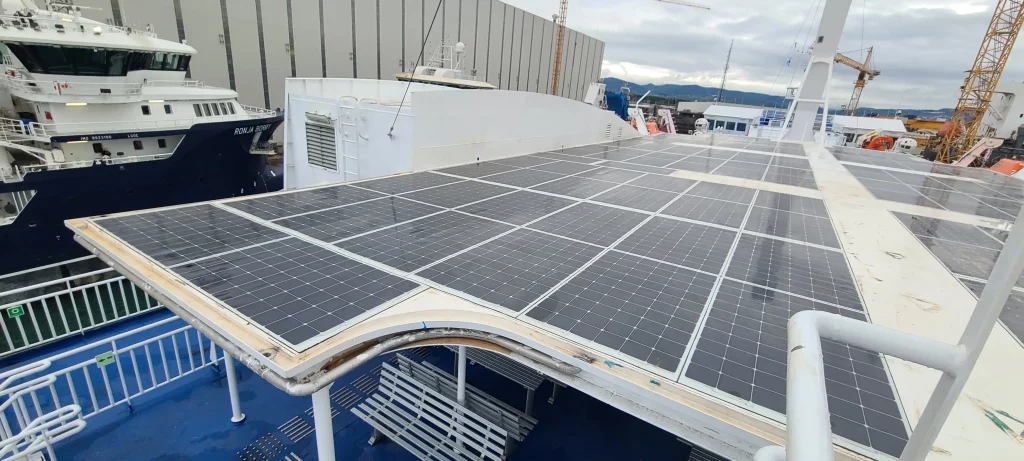
That translated into specific, vessel-level solutions. The team developed a working matrix governing how photovoltaic power could enter the main grid, so that solar generation could never interfere with blackout recovery sequencing, and the slim panels were mounted on aluminium frames so they doubled as shading for upper-deck passengers. The LNG venting was led through a wide but slim structural duct, protecting safety and
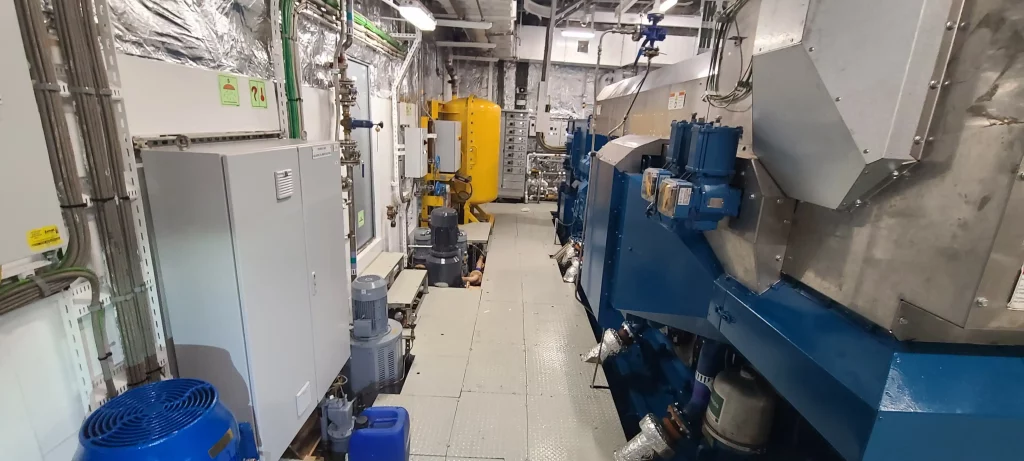
ventilation while preserving the lounge and cabin arrangement. The battery system was configured for peak shaving, load sharing and silent-mode operation, cutting fuel use and noise in port and at low load.
The wider focus was system behaviour rather than individual installation: how propulsion, electrical systems, automation, batteries, LNG, photovoltaic power, passenger spaces, hotel loads and safety systems would work together as one vessel. Modern hybrid vessels create risks that sit between disciplines rather than inside any one system, so Bluestone brought naval architecture, marine engineering, electrical, structural, automation and commissioning expertise together to manage those interfaces before they became late-stage issues. The team’s digital plan approval and site supervision platform supported this by centralising drawings, comments, inspections and approvals in one environment, a record that becomes increasingly valuable for warranty, drydock planning and lifecycle asset management.
Why it matters
NEREA shows why supervision must evolve with vessel design. Hybridisation, alternative fuels and onboard energy management deliver real efficiency and emissions benefits, but only when integrated properly from the start. The risk is not whether an LNG, battery or photovoltaic system is compliant in isolation, but how those systems interact under normal operation, abnormal operation, maintenance and emergency recovery. For owners, independent supervision is therefore a strategic safeguard, reducing hidden defects and helping ensure the vessel is not only compliant at delivery, but safe, maintainable and adaptable across its working life.
Key project highlights
- 110 m Ro-Pax ferry built by Sefine Shipyard for Caronte & Tourist
- Winner of a Shippax Award 2025
- Designed for short-sea services around Sicily
- Capacity for up to 800 passengers in Class B operation and 400 passengers in Class A, plus 520 lane metres of vehicles
- Diesel-gas/electric propulsion, LNG capability and 1,000 kWh lithium battery system
- Photovoltaic panels, silicone-based hull paint and advanced energy management
- Dynamic positioning capability
- Passenger cabins and accessibility features for persons with reduced mobility
- Estimated reductions of 45% CO2, 60% NOx, 99% SOx and 99% PM compared with a similar MDO-powered vessel when operating on LNG
Bluestone expertise demonstrated
- Newbuilding supervision and plan approval
- Contract specification review and owner’s technical representation
- Hybrid propulsion and energy system interface oversight
- Photovoltaic-to-grid integration review
- Blackout recovery and power management coordination
- Battery energy storage configuration for peak shaving, load sharing and silent mode
- LNG venting and space allocation coordination
- Passenger-vessel systems integration
- Site supervision, commissioning, sea trials and delivery support
- Digital documentation and lifecycle traceability