

How Bluestone executed a Tier III SCR retrofit on board an operating cruise vessel
Retrofitting emission-control systems on vessels already in service is a different challenge from newbuilding. Space is limited, systems are already in operation, and installation must often take place without interrupting commercial activity. Delivering a compliant solution therefore depends as much on integration and execution as on design.
This project involved the installation of a Tier III Selective Catalytic Reduction (SCR) system on board a large cruise vessel, with the objective of reducing NOx emissions while keeping the vessel fully operational throughout the works.
The project
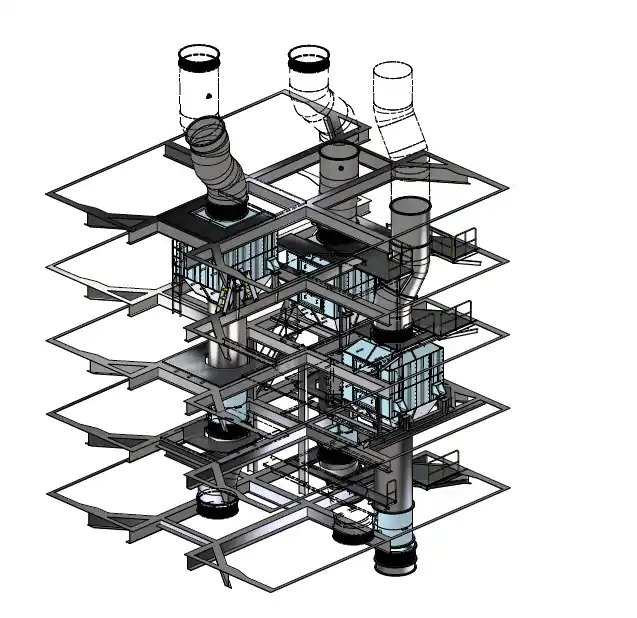
Bluestone was responsible for delivering the retrofit from initial assessment through to commissioning. The scope covered 3D scanning, engineering development, technical documentation, procurement, removal of existing equipment, access preparation, prefabrication, installation and final system integration.
A defining constraint was that the vessel remained in service during the project. All activities had to be planned around ongoing operations, requiring careful coordination to ensure safety, continuity and minimal disruption on board.
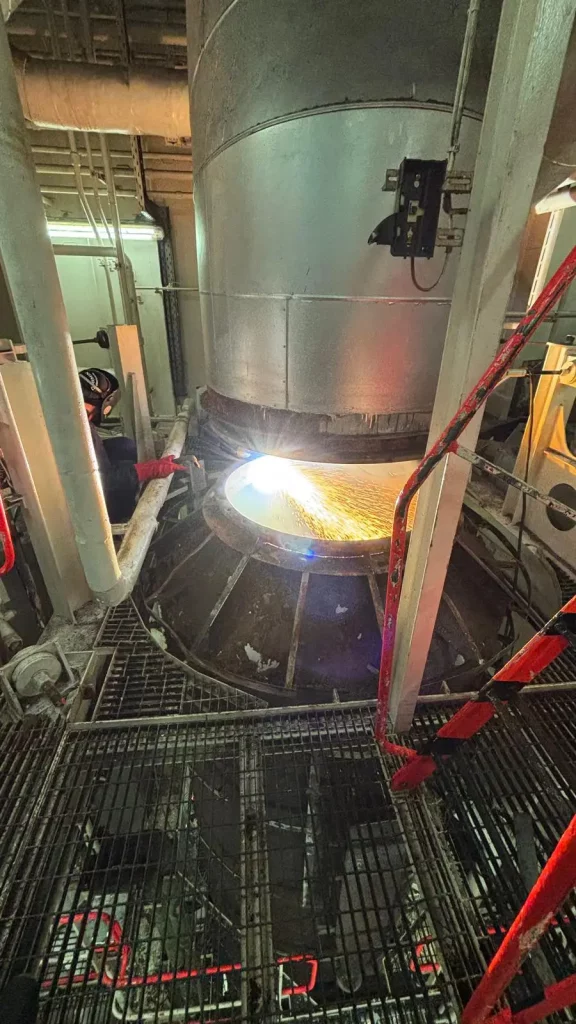
The first stage focused on removing the existing exhaust silencers. Located within confined engine casing areas, they could not be extracted intact. Controlled plasma cutting was used to divide the structures into smaller sections, enabling safe removal without affecting adjacent systems or operational conditions.
The challenge
Integrating an SCR system into an existing machinery space requires working within tight physical and operational limits. Available space is constrained, routing options are restricted and access for installation and future maintenance must be preserved.
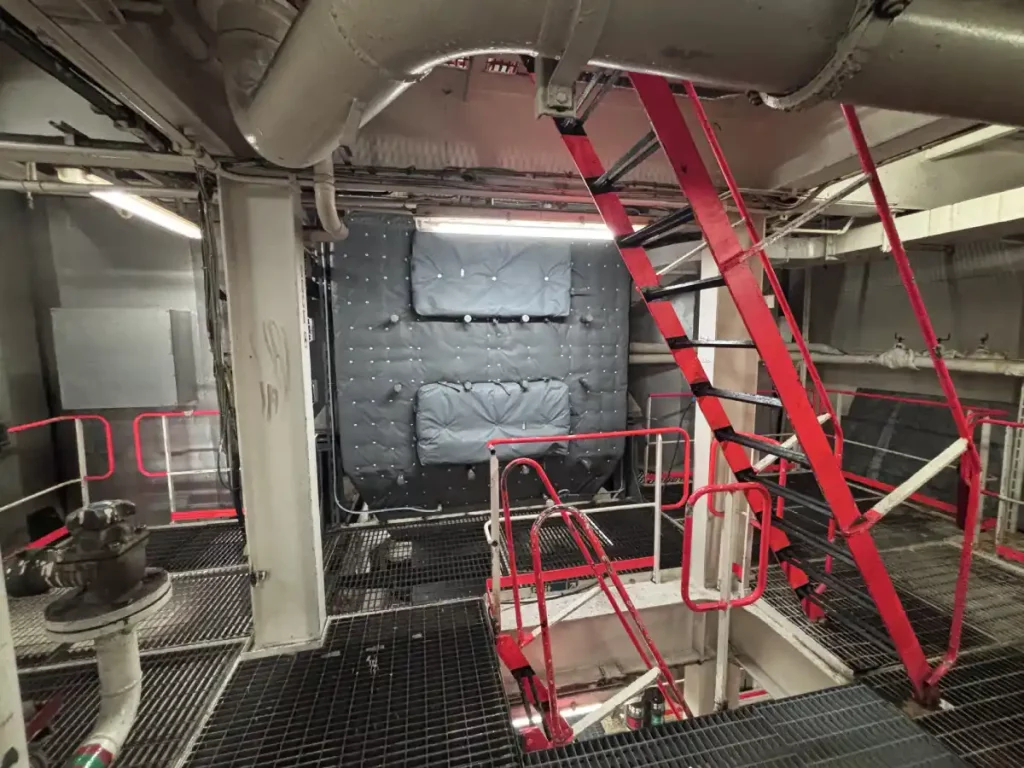
Replacing the original silencers with three stainless steel SCR reactor housings required precise positioning within these limitations. Detailed 3D scanning and verification ensured that the new components could be installed accurately and aligned with the existing exhaust system.
The installation of new ducting and pipework introduced further complexity. Around 30 metres of exhaust gas ducts and more than 400 metres of stainless steel piping had to be routed through congested areas, often close to running diesel generators. Achieving safe clearances while maintaining system performance required careful sequencing and coordination.
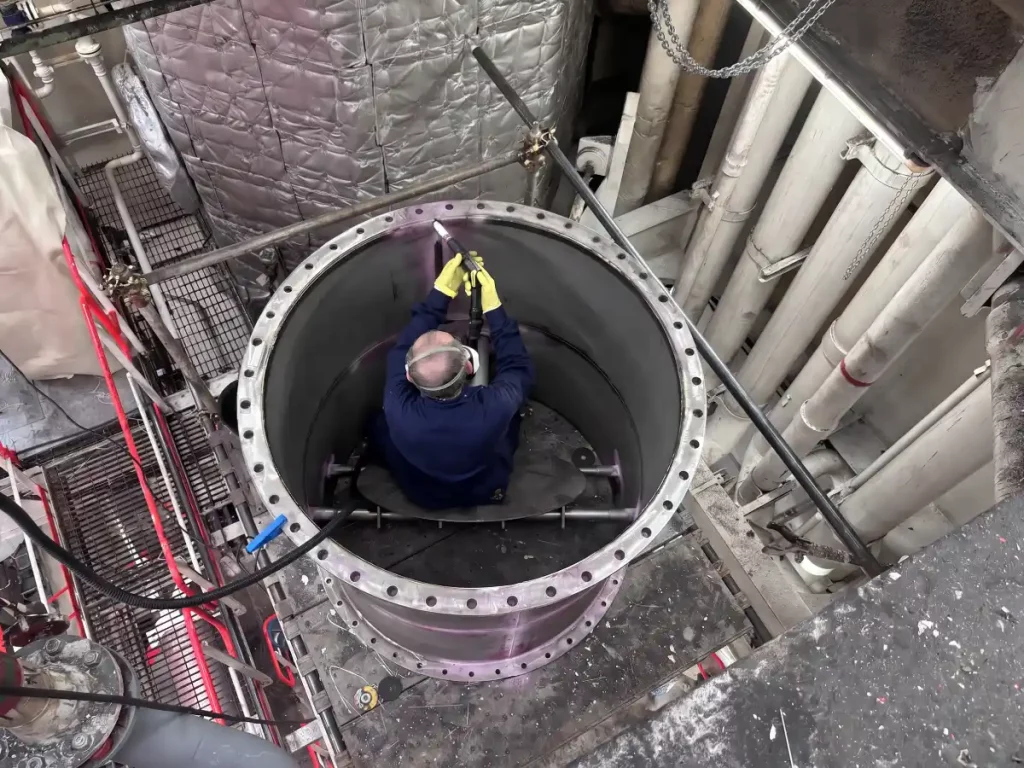
Material treatment and fabrication quality were also critical. Stainless steel components were subject to inspection, cleaning, pickling and passivation to restore corrosion resistance and ensure durability in a marine environment.
An additional integration task involved converting an existing 17 m³ stainless steel tank into a urea storage unit. This required structural modifications, new connections and full incorporation into the SCR system, demonstrating the need to adapt existing onboard assets rather than relying solely on new installations.
Bluestone’s approach
Bluestone managed both the engineering definition and onboard execution, ensuring consistency between design intent and installation reality. The approach combined detailed preparation with controlled implementation in a live operational setting.
3D scanning provided an accurate representation of existing conditions, reducing uncertainty during design and fabrication. Prefabrication was used where possible to limit onboard work, while installation sequences were planned to align with operational constraints.
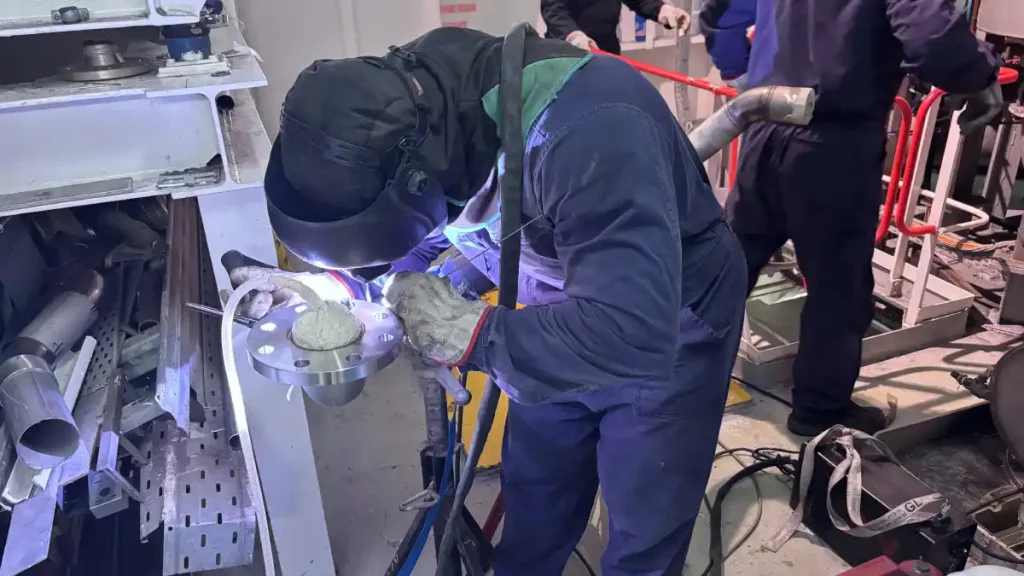
During installation, welding quality and system integrity were closely controlled. TIG welding with full argon back purging was applied throughout to ensure reliable joints and prevent internal contamination. Continuous supervision allowed immediate adjustments where routing, access or integration required refinement.
Coordination between Bluestone’s teams, the vessel’s crew and project stakeholders was essential. Regular communication ensured that technical decisions remained aligned with operational requirements and that the work progressed safely within the constraints of an active vessel.
Why it matters
Retrofitting emission-reduction systems on operating vessels requires more than compliant equipment. Success depends on how well new systems are integrated into existing structures, how installation is managed under operational constraints, and how the vessel continues to perform after modification.
This project shows that complex environmental upgrades can be carried out without removing a vessel from service, provided that engineering, planning and execution are closely aligned. For operators, this reduces downtime while still meeting increasingly strict regulatory requirements.
As emissions standards continue to evolve, the ability to deliver retrofit solutions in operational environments will become increasingly important for extending the service life and compliance of existing fleets.
Key project highlights
- Tier III SCR retrofit carried out on an operational cruise vessel
- 3 stainless steel SCR reactor housings installed
- Over 400 metres of stainless steel piping integrated
- Approximately 30 metres of exhaust gas ducting installed
- Conversion of an existing 17 m³ tank into urea storage
- More than 15,000 project man-hours completed
Bluestone expertise demonstrated
- Retrofit engineering and onboard execution management
- 3D scanning and integration within constrained machinery spaces
- Removal and replacement of major exhaust system components
- High-quality stainless steel fabrication and TIG welding with back purging
- Corrosion protection through cleaning, pickling and passivation
- Adaptation and reuse of existing onboard systems
- Coordination with vessel crew during live operations
Safe and efficient delivery under operational constraints