
How Bluestone supported the plan approval and construction supervision of a high-power, high-precision offshore asset
By George Balan, PhD Eng., Head of Shipbuilding Supervision and Plan Approval, Bluestone Group
Prysmian Monna Lisa was built for a new generation of offshore cable installation. Designed for deep-water cable-laying and repair at depths of up to 3,000 metres, it brings high cable capacity, DP3 capability, energy storage, high-voltage shore connection and biodiesel-blend readiness together in one highly complex platform. Built by VARD for Prysmian, the vessel was named Ship of the Year 2025 by Norwegian maritime magazine Skipsrevyen.
For Bluestone, Prysmian Monna Lisa shows why modern specialist vessels need independent, engineering-led supervision throughout the build. On technically ‘dense’ vessels, the challenge is ensuring the approved design can be safely built, integrated, inspected, maintained and operated across the full lifecycle.
The project
Monna Lisa (IMO 9995911) is purpose-built for complex offshore cable installation and repair, with the highest cable-loading capacity on the market across two carousels of 10,000 and 7,000 tonnes. Its operating profile depends on precision positioning, high power availability, robust redundancy and the ability to support large project teams during demanding offshore campaigns. An enhanced energy storage system that doubles the capacity of its predecessor, Leonardo da Vinci, a high-voltage shore connection allowing full operation on shore power in port, and diesel generators prepared for biodiesel blends all improve efficiency and environmental performance, while raising the level of technical coordination required during construction. Bluestone was contracted for plan approval and construction supervision across a three-vessel cable-layer programme for Prysmian, of which Prysmian Monna Lisa forms part.
The challenge
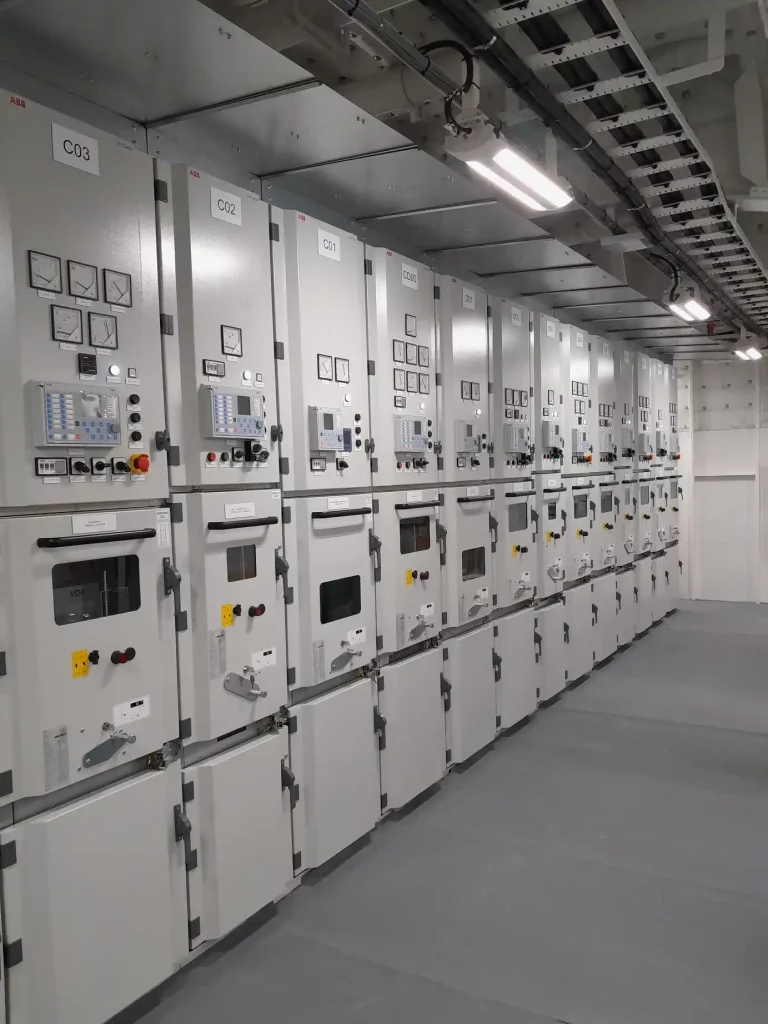
Cable-laying vessels are integrated mission platforms where propulsion, power management, dynamic positioning, energy storage, cable-handling equipment, automation, high-voltage systems and structure must all work together. For Prysmian Monna Lisa, much of the supervision challenge came from integrating features the predecessor vessel had never carried, with no onboard precedent to copy.
The high-voltage shore connection was a clear example. Because Leonardo da Vinci had not been fitted with shore power or this energy storage configuration, the incoming high-voltage breaker had to be positioned from scratch, and its cable routing defined so that it satisfied both electrical segregation and DP3 redundancy at the same time. DP3 capability places strict demands on failure tolerance: the vessel must hold safe positioning even when individual systems or compartments are lost to a fault, which makes routing, system separation and equipment arrangement central to safety and performance.
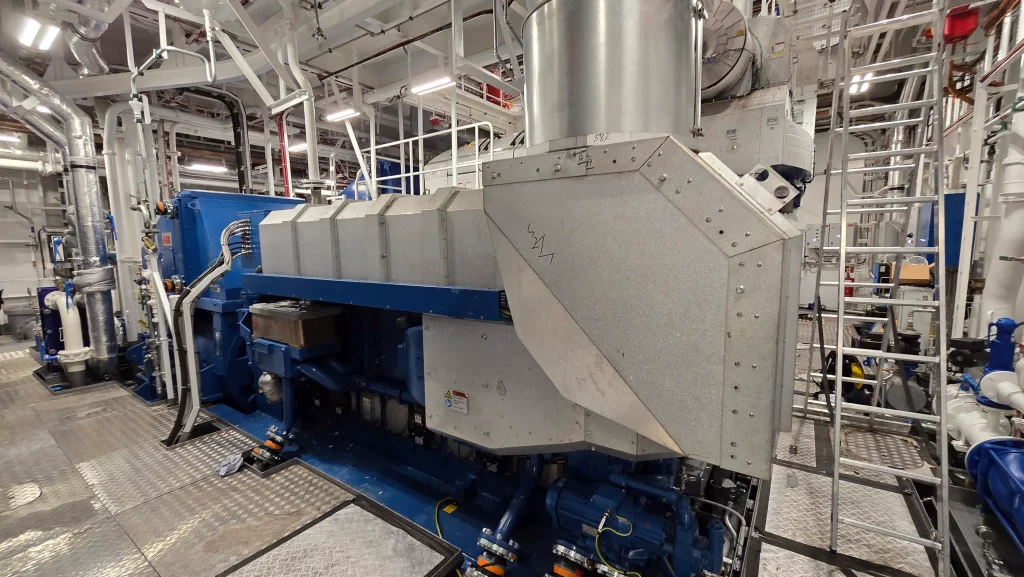
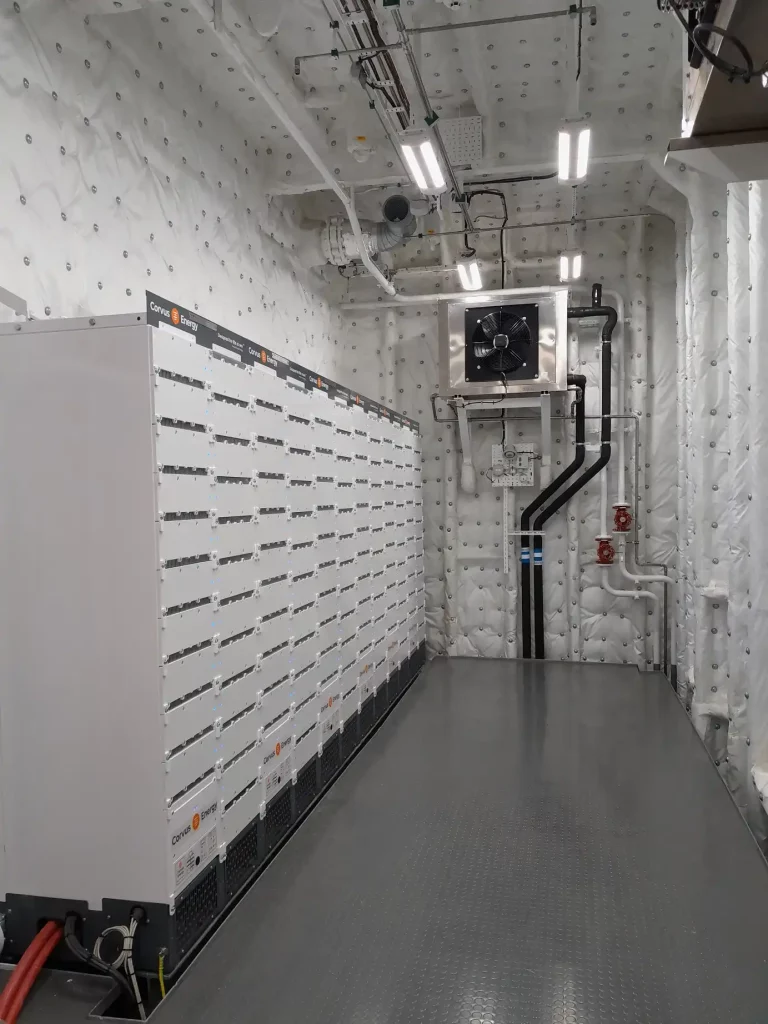
The battery energy storage system raised a parallel problem. Class society rules and European (EMSA) recommendations are not fully harmonised, so there was no single rulebook for the battery space. Bluestone supervised the installation and functionality testing of the system and worked to define a battery-room arrangement that mitigated every medium and high hazard identified in the Batteries Risk Assessment. The system itself had to manage both the AC and DC grids, handling peak shaving and load sharing in AC mode and providing spinning reserve for the DP3 functions in DC mode.
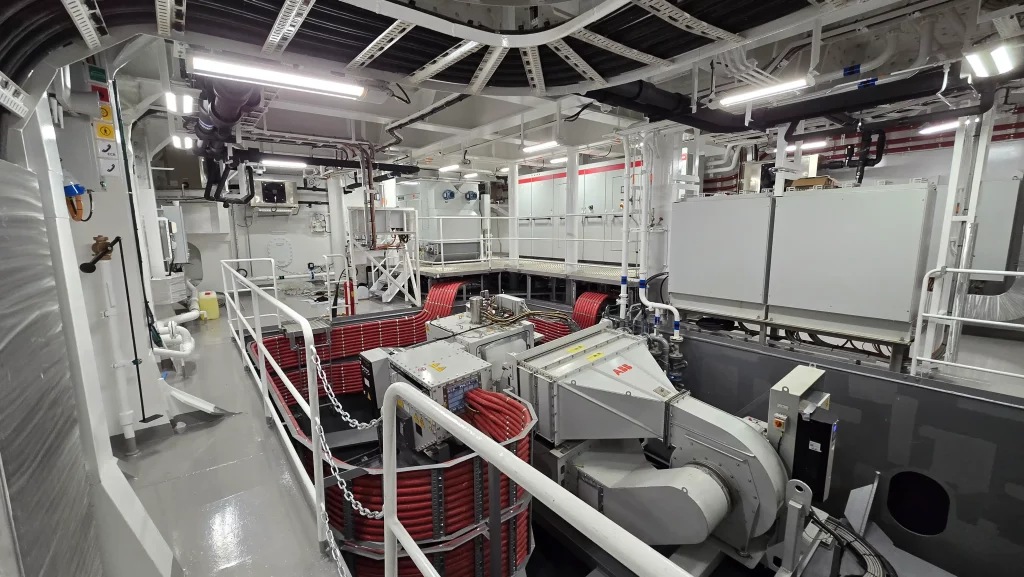
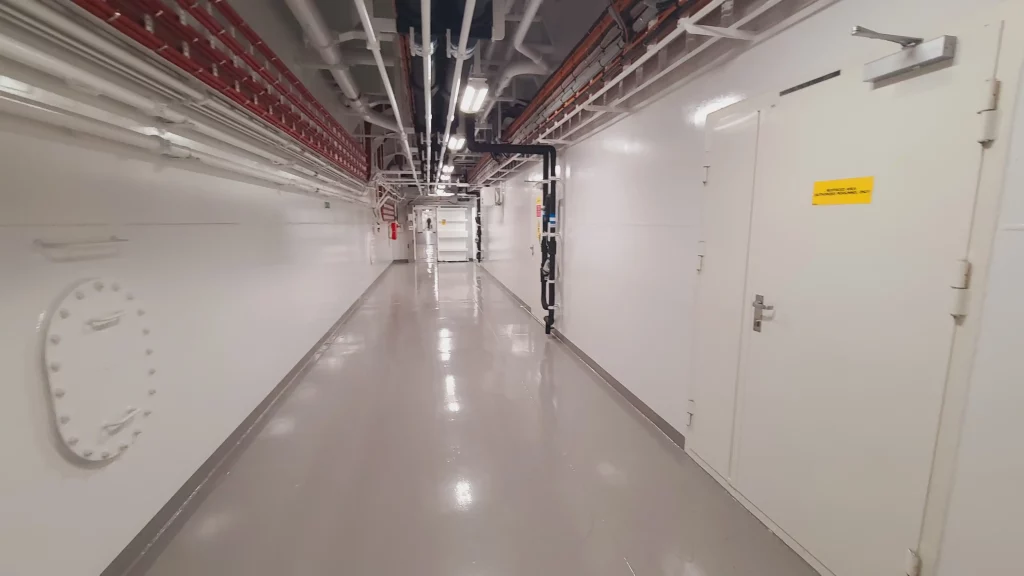
Segregation and redundancy then had to be carried through the whole vessel. Signal cables had to be kept clear of power cables continuously, fore to aft and from the bottom to the mast, and power redundancy maintained through fire-resistant structural ducting. In some locations, dual feeding with automatic changeover was the only practical way to preserve it. These risks do not sit neatly within one technical discipline, which is why periodic inspection is not enough: on a vessel like Prysmian Monna Lisa, supervision must be continuous, multidisciplinary and engineering-led.
Bluestone’s approach
Bluestone acts as the missing link between the owner’s requirements and the shipyard’s execution, serving as the owner’s independent technical representative from plan approval through construction, commissioning, sea trials and delivery. On Prysmian Monna Lisa, that work ran from reviewing building drawings and equipment purchase orders, through yard and subcontractor audits and Factory Acceptance Tests for major equipment, to continuous on-site supervision and the owner’s technical role in periodic build meetings.
The team looked beyond whether individual components were installed correctly to whether the whole technical architecture supported safe operation, maintainability and long-term adaptability. That included areas the classification societies do not cover, such as coating quality in tanks, voids and confined spaces to the PSPC standard, thermal and fire insulation, HVAC, and the operational systems that define a cable-layer, including cable-handling equipment, cranes and winches. Patrolling inspections during construction let the team call for corrections to piping and cable routing, segregation, maintenance pathways and safe access while they were still inexpensive to make. Where possible, the team also pressed for future-upgrade readiness, including spare space in technical rooms and spare capacity on cable trays, penetrations and switchboards, so the vessel stays adaptable as regulation evolves.
Bringing naval architecture, marine engineering, electrical, structural, automation and project-management expertise together moved supervision beyond checklist compliance to concentrate on interface risk: where systems meet, where responsibilities overlap and where operational issues emerge if the build is not carefully controlled. Bluestone’s proprietary plan approval and site supervision platform centralised drawings, comments, inspection records and approvals, creating a clear project history during construction and a permanent technical record afterwards. On a vessel like Prysmian Monna Lisa, that record underpins warranty management, drydock planning, future modifications, sister-vessel consistency and lifecycle asset management.
Why it matters
Prysmian Monna Lisa shows how far newbuilding supervision has evolved. Beyond schedule, delivery risk is about whether the vessel is built with the technical discipline to protect safety, performance, redundancy and long-term adaptability. As offshore energy projects grow larger and more demanding, cable-laying vessels must deliver exceptional reliability, precision and power availability, and that cannot be achieved by reviewing systems in isolation. For owners, independent supervision is a safe0guard against hidden defects, fragmented decision-making and late-stage rework, helping ensure that what the yard delivers reflects not only the approved design but the operational reality the vessel will face.
Key project highlights
- Cable-laying vessel built by VARD for Prysmian (IMO 9995911)
- Awarded Ship of the Year 2025 by Skipsrevyen
- 171 m length and 34 m beam
- Highest cable-loading capacity on the market, across two carousels of 10,000 and 7,000 tonnes
- Designed for deep-water cable installation at depths beyond 3,000 metres
- DP3 capability and an enhanced energy storage system that doubles the capacity of predecessor Leonardo da Vinci
- Diesel generators prepared for biodiesel blends
- Part of Prysmian’s next-generation cable-laying vessel programme
Bluestone expertise demonstrated
- Plan approval, drawing and purchase-order review
- Owner’s technical representation and the missing link between owner and shipyard
- Yard and subcontractor audits and Factory Acceptance Test attendance
- High-voltage breaker positioning and shore-connection integration
- DP3 redundancy, segregation and dual-feed coordination
- Battery energy storage installation, testing and risk-assessment-led room arrangement
- PSPC coating, insulation and class-uncovered area inspection
- Cable-laying equipment and deck-machinery supervision
- Continuous on-site supervision, commissioning, sea trials and delivery support
- Digital documentation and lifecycle traceability